
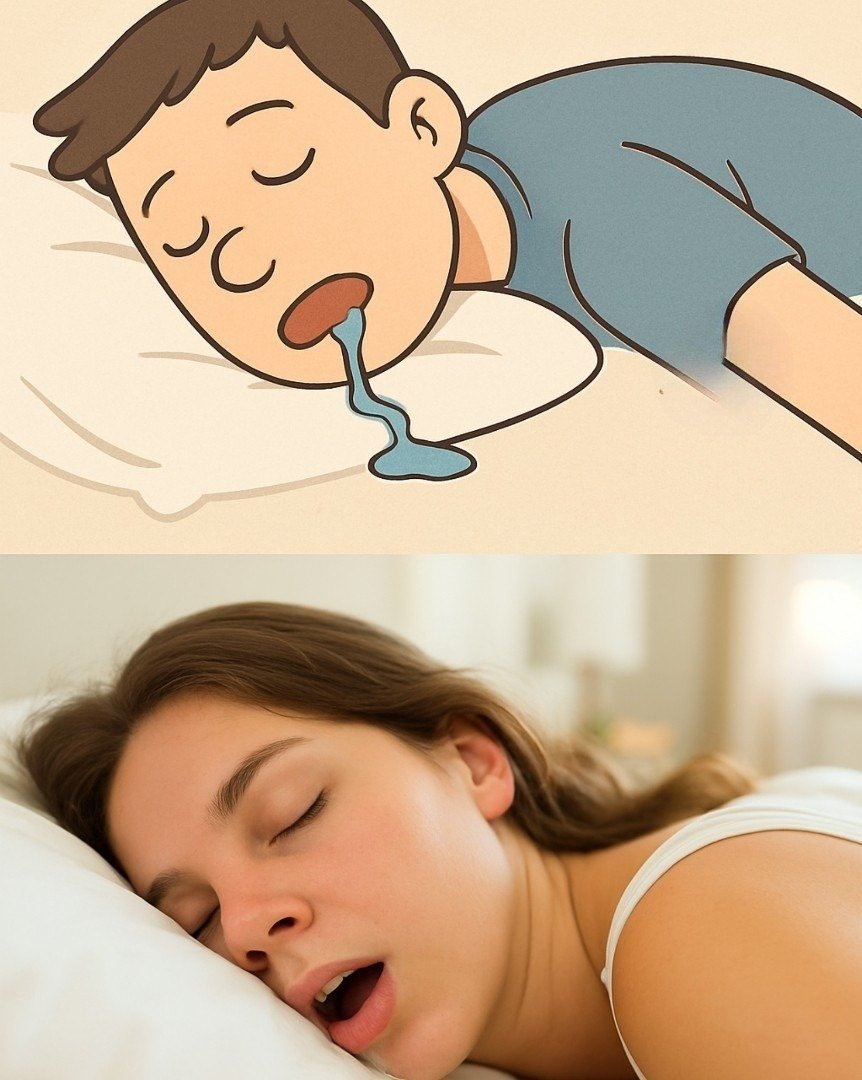
If you drool in your sleep, it’s a sign that your brain
Drooling during sleep is often viewed as a minor embarrassment, but it is actually a strong indicator of high-quality, restorative rest. While it might leave a damp spot on your pillow, the physiological mechanics behind it suggest that your body is operating exactly as it should during its most critical recovery phase.
The Science of the “Soggy Pillow”
When you enter REM (Rapid Eye Movement) sleep, your body undergoes a process called REM atonia. This is a temporary state of muscle paralysis that prevents you from acting out your dreams.
This paralysis extends to the muscles involved in swallowing. During the day, you swallow excess saliva subconsciously. In deep REM sleep, those “swallowing reflex” muscles are so relaxed that saliva simply pools in the mouth. If you happen to be sleeping on your side or stomach, gravity takes over, and the saliva escapes—resulting in drooling.
Why It’s a Good Sign
Drooling isn’t just a side effect of sleep; it’s a marker of deep sleep architecture. Here is what it says about your brain:
- Uninterrupted REM Cycles: Drooling usually only happens when you have transitioned fully into REM sleep without being startled awake by noise, light, or sleep apnea.
- Optimal Muscle Relaxation: It indicates that your body has achieved the deep physical “shutdown” required for neurological repair.
- Reduced Stress Levels: People who are chronically stressed or have high cortisol levels often struggle to reach the stage of relaxation necessary for drooling to occur.
The Takeaway: If you wake up and find you’ve drooled, it means your brain successfully navigated the complex transition into deep, restorative sleep. It’s a sign of a “well-slept” brain.
When Should You Be Concerned?
While usually a positive sign, excessive or sudden-onset drooling can occasionally point to underlying issues. You should take a closer look if drooling is accompanied by:
- Sleep Apnea: If you are drooling but also waking up gasping for air or feeling exhausted during the day, it may be a sign of a blocked airway.
- Nasal Congestion: If your nose is blocked due to allergies or a cold, you are forced to breathe through your mouth, which significantly increases drooling.
- GERD (Acid Reflux): Gastric acid can stimulate the salivary glands to produce more fluid to protect the esophagus.
How to Manage It
If the damp pillows are becoming a nuisance, a few simple adjustments can help redirect the flow:
- Sleep on Your Back: This allows saliva to naturally pool at the back of the throat, where it is more likely to trigger a subconscious swallow rather than escaping.
- Check Your Hydration: Dehydration can actually make saliva thicker and more prone to pooling.
- Clear Your Sinuses: Using a saline rinse or a humidifier can help keep nasal passages open, encouraging nose-breathing over mouth-breathing.