
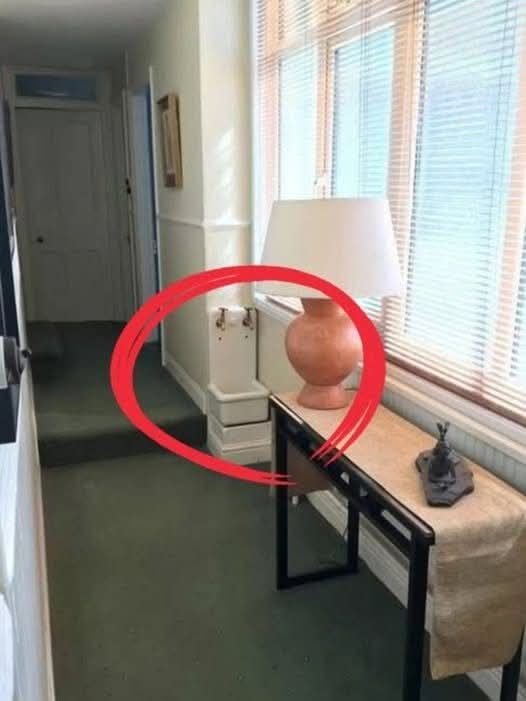
I recently bought a new house, and there’s a small sink in the hallway. I’m puzzled about why it was installed there and what it might have been used for in the past. I’m not sure yet if I want to keep it.
Finding a sink in a hallway can definitely feel like a glitch in the floor plan, but it’s actually a distinct architectural “fingerprint” usually found in Victorian or early 20th-century homes.
What you are looking at is almost certainly a “Slop Sink” or a “Butler’s Sink,” and its presence tells a very specific story about how your house used to function.
Why Is It There? (The Historical Context)
Before the era of modern, high-suction vacuum cleaners and lightweight microfiber mops, cleaning a house was a heavy, water-intensive labor.
1. The “Slop Sink” Theory
In larger period homes, these sinks were installed on upper floors or in central hallways so that staff didn’t have to carry heavy buckets of dirty water (the “slops”) all the way down to the kitchen or outside.
- The Clue: Notice the low height or the deep basin. These were designed specifically to fit a bucket underneath the taps.
2. The Medical/Hygiene Theory
If the house is from the late 19th century, it may have been installed during the “Sanitary Movement.” After several cholera and flu outbreaks, it became a trend in middle-class homes to have “wash-hand” stations near bedrooms or entryways to prevent the spread of germs from the street into the living quarters—much like a modern mudroom sink.
3. The Religious Theory (The Piscina)
In certain very old European homes or houses built for specific religious communities, a small hallway sink served for ritual washing (ablution) before prayer or upon entering the home.
Should You Keep It?
Deciding whether to rip it out or restore it depends on your lifestyle. Here is how modern homeowners usually handle these:
| Direction | Pros | Cons |
|---|---|---|
| Restore | High “character” value for resale; great for watering hallway plants or quick hand-washing. | Can look cluttered; plumbing in old walls is notoriously finicky to repair. |
| Repurpose | You can swap the sink for a built-in “wet bar” or a dedicated plant-care station. | Requires new cabinetry and potentially moving the electrical outlets. |
| Remove | Opens up the hallway for a clean look or a much-needed storage closet. | You lose a piece of the home’s history; requires professional capping of water and waste lines. |
Check Before You Pipe: If you decide to keep it, have a plumber check the “P-Trap” (the U-shaped pipe underneath). In hallway sinks that haven’t been used in years, the water in the trap evaporates, allowing “sewer gas” to leak into the house. Simply running the water for 30 seconds once a week prevents this.