The Secret Beneath the Gauze: Why Our Housekeeper Always Wore a Bandage
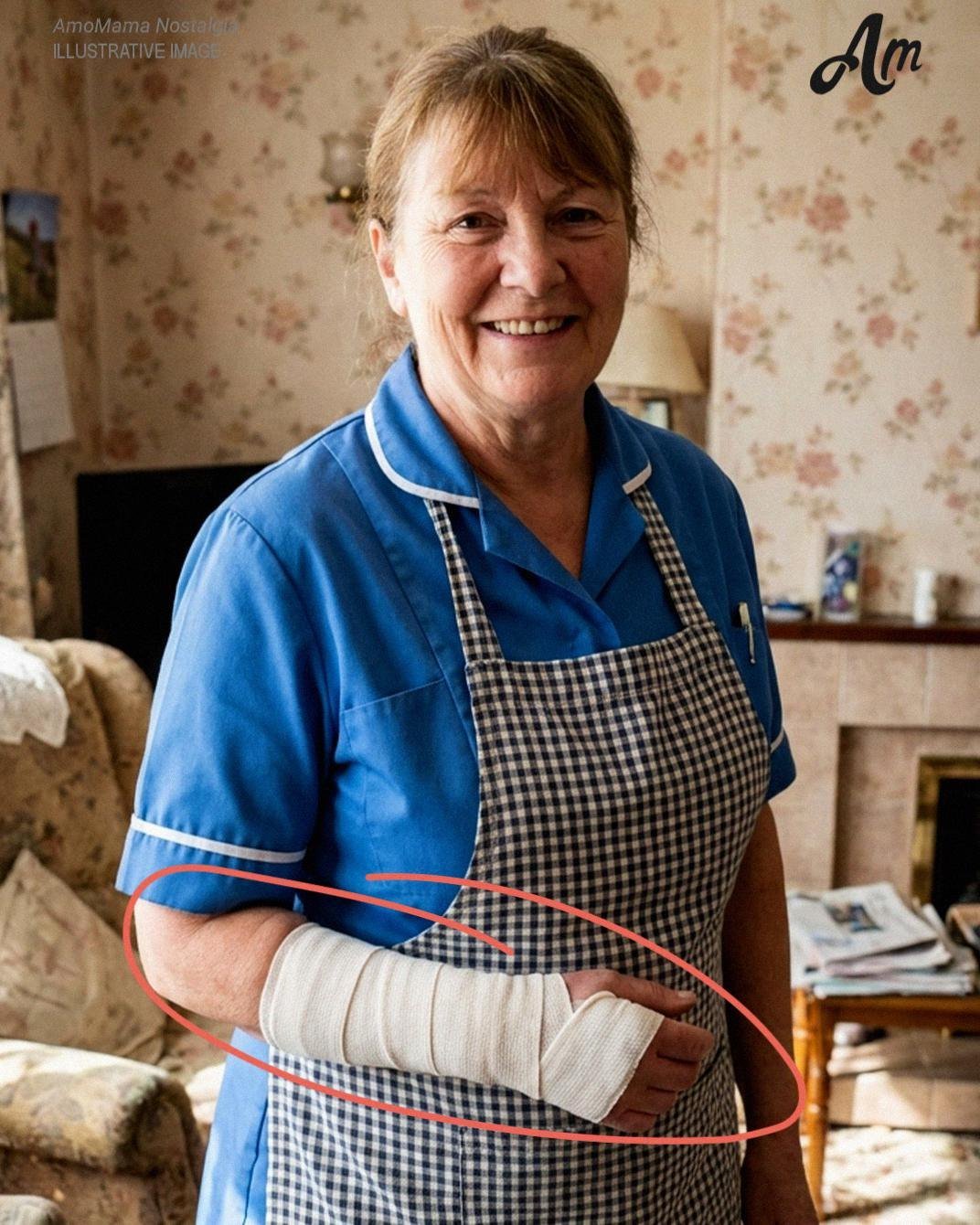
When we hired Martha, she seemed like the answer to our prayers. Soft-spoken, meticulous, and always smelling faintly of lavender and lemon wax, she transformed our chaotic home into a sanctuary within weeks. But from the very first day, there was one thing that didn’t fit her pristine image: a thick, elastic bandage wrapped around her right forearm.
Whenever I asked about it, Martha would simply offer a polite, tight-lipped smile. “Just an old kitchen mishap, dear. It needs the support.”
I didn’t push. After all, her work was flawless. But as the months passed, curiosity began to turn into a nagging suspicion. Why did it never heal? Why did she flinch when she thought I was looking? The truth, as it turned out, was far more shocking than any “mishap.”
A Pattern of Secrecy
Martha was the model of consistency. She arrived at 8:00 AM sharp, her blue uniform pressed, and that beige bandage freshly wrapped. However, I started noticing small, odd behaviors:
- The Glove Protocol: She never took off her cleaning gloves, even when doing dry dusting or tidying the living room.
- The Mirror Reflex: I once caught her adjusting the bandage in the hallway mirror. The moment she saw my reflection, she dropped her sleeve and hurried away, her face pale.
- The Medical Scent: One afternoon, the house didn’t smell like lemons. It smelled like heavy-duty antiseptic and something metallic—a scent that stayed confined to whichever room Martha had just left.
The Moment of Revelation
The mystery reached its breaking point on a Tuesday afternoon. I had returned home early from a cancelled meeting and entered through the mudroom. I heard a soft groan coming from the kitchen.
There was Martha, sitting at the breakfast nook. The bandage was off, lying like a coiled snake on the table. She was applying a thick, dark salve to her arm, her back turned to me.
“Martha? Are you alright?” I asked softly.
She jumped, nearly knocking over the jar. As she scrambled to cover her arm with her apron, I saw it. It wasn’t a burn, and it wasn’t a scar.
Underneath the gauze, her skin was covered in a series of intricate, professional-grade tattoos that looked like a ledger of names and dates, interspersed with symbols I didn’t recognize. But that wasn’t the horrifying part. Between the tattoos were fresh, jagged marks that looked like they had been made by someone desperate to “erase” the ink.
The Shocking Discovery
Tearfully, Martha finally sat me down. The “housekeeper” we had grown to love had a past she was terrified would catch up to her.
Those names? They weren’t family. They were the identities Martha had helped hide as part of an underground relocation network for women fleeing dangerous situations decades ago. The bandage wasn’t protecting an injury; it was protecting her identity and the names of those she had saved.
She had been “erasing” her own history to ensure that if she were ever recognized, the physical evidence of her past life wouldn’t put her—or us—at risk. She was horrified that I had seen the “shame” of her past, while I was horrified by the weight of the secret she had been carrying alone.
The Aftermath
We didn’t fire Martha. In fact, we did the opposite. We helped her find a specialist to treat the skin damage she had caused herself in her fear.
The bandage stayed for a while longer—not as a shroud of secrecy, but as a symbol of healing. We realized that the “sweet housekeeper” was actually a hero in hiding, proving once again that the people we let into our homes often carry worlds we can’t begin to imagine.
The Lesson: True character isn’t found in a clean house, but in the scars someone is willing to carry for the sake of others.